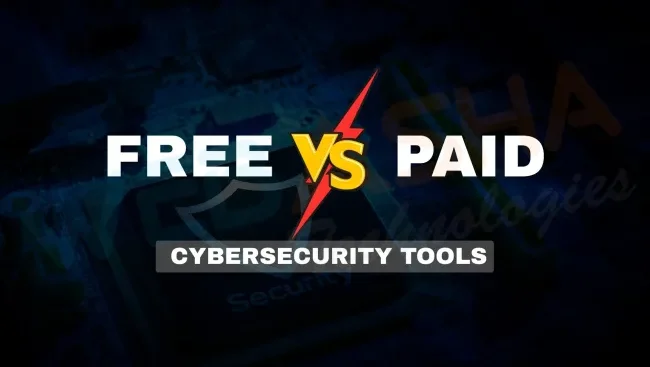
Free vs Paid Cybersecurity Tools: A Detailed Comparison

Cybersecurity is an absolute necessity in the current digital era. Having the appropriate tools in place can make the difference between a tragic data breach and peace of mind when it comes to protecting your personal information and company data.

However, with so many cybersecurity tools at your disposal, the topic of whether to use free or premium solutions keeps coming up. Let’s dissect it.

What Are the Benefits of Free Cybersecurity Tools?

For novice users or small enterprises with tight budgets, free tools are perfect. Usually, they consist of:

Fundamental Defense

The majority of free antivirus programs provide necessary defense against malware, spyware, and viruses.

Frequent Updates

Security updates are provided by good free software to protect against emerging dangers.

Restricted Features

You won’t get sophisticated features like firewalls, VPNs, ransomware protection, or real-time threat detection; you’ll only get the necessities.

Community Assistance

Instead of providing direct customer support, free tools typically rely on forums or community conversations.

Well-Liked Free Tools:

  • Free Avast Antivirus
  • Free Malwarebytes
  • The Free Edition of Bitdefender
  • Free ZoneAlarm Firewall

What Are the Benefits of Free Cybersecurity Tools?

What is Included in Paid Cybersecurity Tools?

Businesses, remote workers, and multi-device families are among the users who want strong, all-in-one protection that paid cybersecurity technologies are made for.

Superior Threat Identification

Phishing blockers, ransomware protection, behavioral analysis, and AI-based detection engines are examples of paid technologies.

Support for Multiple Devices

Use a single license to secure all of your devices, including Windows, macOS, Android, and iOS.

Additional Features

The majority of premium plans come with features like:

  • VPNs for safe online browsing
  • Managers of passwords
  • Controls by parents
  • Monitoring of data breaches
  • Safe cloud backup

Superior Assistance

Support will be available to you by phone or chat around the clock.

  • Well-liked Paid Resources:
  • Norton 360
  • Bitdefender Complete Security
  • Kaspersky Premium
  • McAfee Complete Defense

What is Included in Paid Cybersecurity Tools?

Free vs Paid: Head-to-Head Comparison

Feature Free Tools Paid Tools
Virus & Malware Protection ✅ Basic ✅ Advanced + Real-time Scanning
Ransomware Defense ❌ Usually Not Included ✅ Yes
VPN ❌ Rare ✅ Often Included
Password Manager ❌ Basic or None ✅ Encrypted & Feature-rich
Customer Support ❌ Community-Based ✅ 24/7 Live Support
Updates ✅ Regular ✅ Faster & Priority Updates
Ads ⚠️ Often Present ❌ Ad-Free

When Is Free the Best Option?

  • You don’t keep sensitive information on your device and just use it periodically.
  • You’re looking for a basic malware security tool that is lightweight and easy to use.
  • You’re on a limited budget or are a student.
  • You know a lot about technology and feel at ease handling cybersecurity by hand.

When Is Paid the Best Option?

  • You work remotely or manage a business.
  • On your device, you keep customer or financial data.
  • You require a comprehensive solution that includes a firewall, VPN, and antivirus software.
  • If something goes wrong, you want expert assistance.
  • You oversee some gadgets for your team or at home.

The final judgment

Although free solutions are a terrific place to start, especially for novice users, commercial cybersecurity software provides the assurance that comes with full protection.

Because cyber threats are constantly changing, having a strong defense system can protect you from financial loss, identity theft, and data breaches.

Therefore, don’t completely neglect cybersecurity, whether you choose free or premium. Protecting your digital life is more important than merely keeping your gadgets safe.

The Significance of a Password Manager for All Remote Workers

The Significance of a Password Manager for All Remote Workers

Working remotely has become the new standard rather than a fad. There is a greater need than ever for robust cybersecurity as more professionals transition from office desks to home settings, coffee shops, or even the beach. One of the digital technologies that remote workers tend to overlook the most? A password organizer.

A password organizer is not only helpful, but also necessary if you manage sensitive client information, log into numerous apps, or switch between platforms daily.

The Issue: Insufficient Security and Too Many Passwords

We all have dozens or maybe hundreds of accounts on the internet, let’s face it. Remote workers frequently log in and out of cloud storage, financial software, project management applications, and work email.

Many individuals either:

  • Use weak passwords that are simple to figure out.
  • Use the same password for all of your accounts.
  • Passwords can be saved in browsers, notes apps, or notebooks.

This gives cybercriminals the ideal chance.

In reality, one of the main reasons for online attacks, according to cybersecurity reports, is password-related breaches.

The Issue: Insufficient Security and Too Many Passwords

A Password Manager: What Is It?

An application that creates, saves, and automatically fills in complicated, one-of-a-kind passwords for every one of your internet accounts is called a password manager. The software securely handles the rest, leaving you with just one master password to remember.

Well-known instances include:

  • 1 Password
  • LastPass
  • Bitwarden
  • Dashlane
  • NordPass

A Password Manager: What Is It?

The Need for One for Remote Workers

1. Make sure all of your accounts are secure.

You probably use Slack, Zoom, Google Workspace, Trello, Dropbox, and other technologies while you work remotely. No more “Password123” or “qwerty” nonsense—a password manager guarantees that every login is distinct and secure.

2. Conserve Time

Don’t waste time looking through documents or changing passwords. Using a password manager allows you to stay busy and focused by automatically filling in your login information.

3. Safeguard Customer and Business Information

Using strong and secure passwords is a fundamental duty, whether you’re working with clients or handling sensitive data. Poor password hygiene might result in a breach that causes financial and legal issues.

4. Utilize Anytime, Anywhere

No matter where you work, you can always be safely logged in thanks to the majority of password managers that sync across desktop, mobile, and tablet devices.

5. Receive Notifications of Account Breach

Nowadays, a lot of managers provide data breach monitoring, alerting you if one of your accounts is affected so you can act promptly.

The Need for One for Remote Workers

Extra Benefits of Password Manager Use

  • Support for two-factor authentication (2FA)
  • Digital vaults and encrypted notes
  • Sharing team passwords (for freelancers and small teams)
  • Password strength checks are built in

Extra Benefits of Password Manager Use

How to Begin

  • Select a trustworthy password manager (several offer free trials).
  • Enter your current logins manually or import them.
  • Allow the app to create secure new passwords for you.
  • To gain access, use your master password and turn on 2FA.

How to Begin

Concluding remarks

Your digital workspace is your lifeblood as a remote worker, but every account you use could be a security risk. In addition to helping you secure those doors, a password manager improves productivity, clears your mind, and protects your data.

Thus, avoid waiting for a security incident. No matter where you are, operate more efficiently, securely, and self-assuredly by getting a password manager now.

2025 Cybersecurity Trends to Keep an Eye on

2025 Cybersecurity Trends to Keep an Eye on

The dangers that lie in cyberspace are growing in sophistication and connectivity along with our digital environment. Governments, corporations, and individuals all now place a high premium on cybersecurity. Using strong passwords alone won’t be enough to keep ahead of potential dangers in 2025; you also need to be aware of new trends, adjust to new technology, and be ready for anything that comes up.

What is the state of cybersecurity this year, then? Let’s examine the most important cybersecurity developments for 2025.

1. Cyberattacks Powered by AI—and Defenses

Cybersecurity is changing due to artificial intelligence, but not only for the better. AI is being used by hackers to automate assaults, produce convincing phishing emails, and find holes more quickly than in the past.

Meanwhile, cybersecurity companies are using AI to:

  • Real-time threat detection
  • Automate breach response
  • Boost the detection of anomalies
  • Make predictive analysis stronger

By 2025, AI vs. AI will dominate the cybersecurity battlefield, necessitating the use of smart systems for defense.

Cyberattacks Powered by AI—and Defenses

2. An increase in IoT and mobile vulnerabilities

As wearable technology, smart homes, and remote work tools become more commonplace, the Internet of Things (IoT) is growing, but so do its vulnerabilities. Strong built-in security is still lacking in many connected devices.

Important dangers for 2025:

  • Hacking of smart TVs and home helpers
  • Wearables that disclose health or location information
  • Unprotected wireless networks
  • Mobile apps with exploitable APIs

Anticipate a drive for more intelligent network segmentation and more stringent IoT rules.

An increase in IoT and mobile vulnerabilities

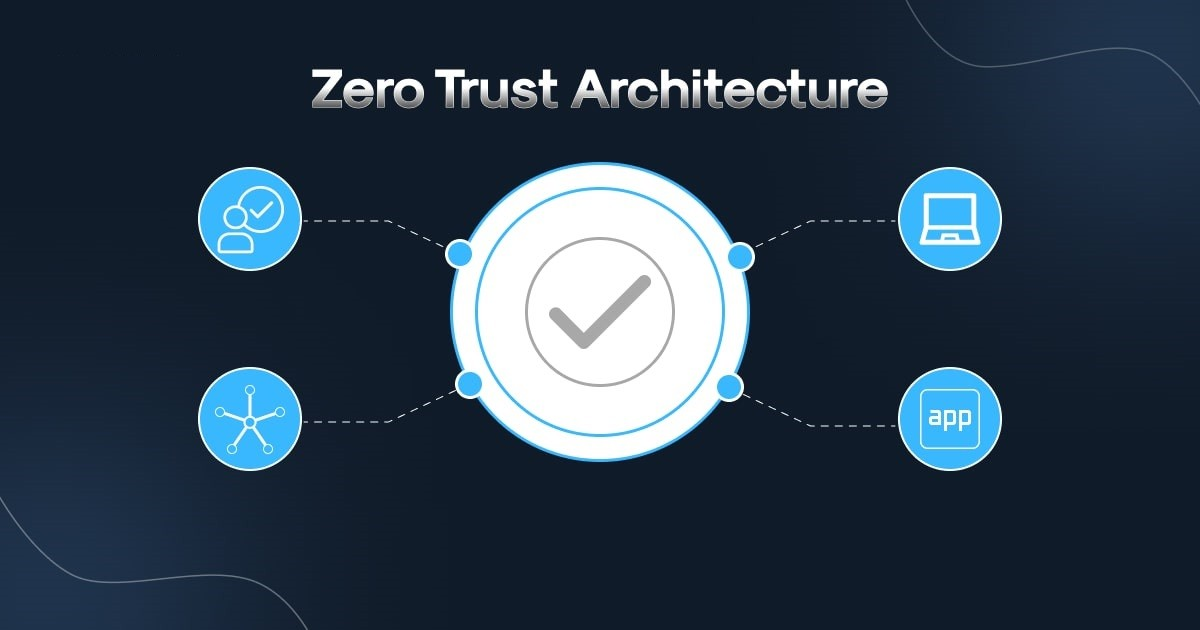
3. The Mainstreaming of Zero Trust Architecture

The core tenet of Zero Trust security is “Never trust, always verify.” More businesses are putting this concept into practice in 2025 in an effort to reduce both external and internal dangers.

Zero Trust entails:

  • Constant verification
  • There is no implicit trust within the network.
  • Access with the least privilege
  • System micro-segmentation

Zero Trust has evolved from a catchphrase to a fundamental security approach, as cloud utilization and hybrid work reach all-time highs.

The Mainstreaming of Zero Trust Architecture

4. The Focus Is on Cloud Security

Although cloud usage is still increasing, many companies continue to undervalue the shared responsibility paradigm, which requires data security from both users and providers.

In 2025, anticipate:

  • Improved encryption methods
  • Tools for cloud monitoring powered by AI
  • Multi-cloud security platform growth
  • More rules about compliance with the cloud

To safeguard assets on AWS, Azure, Google Cloud, and other platforms, organizations must give priority to cloud-native security solutions.

The Focus Is on Cloud Security

5. Ransomware Becomes More Targeted and Aggressive

Instead of slowing down, ransomware is becoming more sophisticated. Attackers are aiming for supply chains, SMBs, and vital infrastructure in 2025, and they are requesting even larger ransom payments.

Among the tactics are:

  • Double extortion (data leak threat plus encryption)
  • Models of ransomware-as-a-service (RaaS)
  • False identities and ransom notes produced by AI

Critical defenses will include incident response plans, backup plans, and staff training.

Ransomware Becomes More Targeted and Aggressive

6. Privacy Laws and Adherence Change

Following in the footsteps of the CCPA and GDPR, more nations are enacting stringent privacy regulations. In 2025, anticipate seeing:

  • Tighter regulations for data residency and transfer
  • Required disclosures of breaches
  • Increased sanctions for noncompliance

To prevent legal and reputational harm, businesses need to invest in data governance, privacy-first designs, and compliance solutions.

Privacy Laws and Adherence Change

7. A Culture of Cybersecurity Awareness

Cyberattacks cannot be stopped by tech means alone; people are still the weakest link. Organizations are focusing more on cybersecurity culture in 2025:

  • Continuous training for staff
  • Phishing campaign simulations
  • Explicit security guidelines
  • Individual cybersecurity training for distant groups

The organization as a whole is safer when everyone knows their part in cybersecurity.

A Culture of Cybersecurity Awareness

Concluding remarks

In 2025, cybersecurity will be more important and complicated than before. The environment of digital defense is rapidly changing due to factors including AI-driven attacks and changing regulations. Being proactive and knowledgeable is essential, regardless of whether you’re an IT manager, business owner, or just someone who uses the internet.

Don’t ignore the dangers until a cyberattack occurs. Make 2025 your most secure year yet by following these trends and making an investment in cutting-edge protection.