
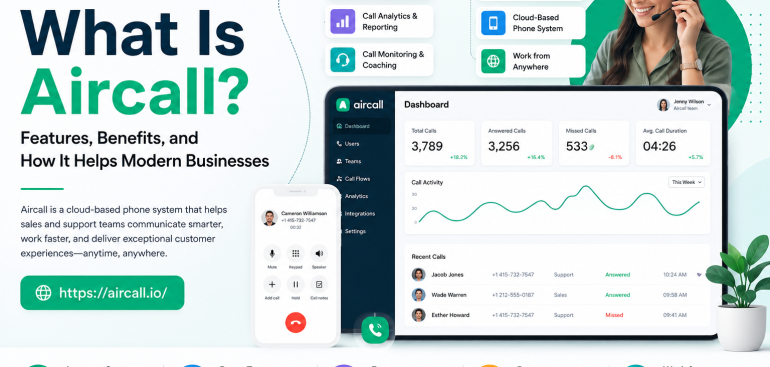
Communication shapes how businesses connect now. Phone setups from the past? They lag behind when teams work from different places. Customers expect more than old systems can give. Enter Aircall – built for today’s pace, not yesterday’s limits.
Cloud-hosted, Aircall works as a business telephone setup that helps organizations handle client talks better. Not just calls but smart tools too – routing, logging, tracking – come built in. Teams focused on selling or assisting can reach out from any location, thanks to internet-powered dialing. Data flows straight into dashboards, showing patterns without extra steps. Syncs happen smoothly with customer platforms already in use. No hardware piles up; everything runs online. Workers adapt fast because the layout stays clear. Calls link directly to records so context never gets lost. Performance clues appear through reports updated live. Remote offices stay aligned using shared call rules. Setup skips complicated wiring, favoring plug-and-go logic. Each team member accesses their own number while sharing one system. Security layers protect every connection by default. Upgrades roll out automatically behind the scenes. Support arrives quickly when issues pop up. Numbers work across devices without hiccups. Call quality holds steady even on unstable networks. Admin controls let managers tweak settings quietly. History logs remain searchable long after chats end. Flexibility grows naturally with company size.
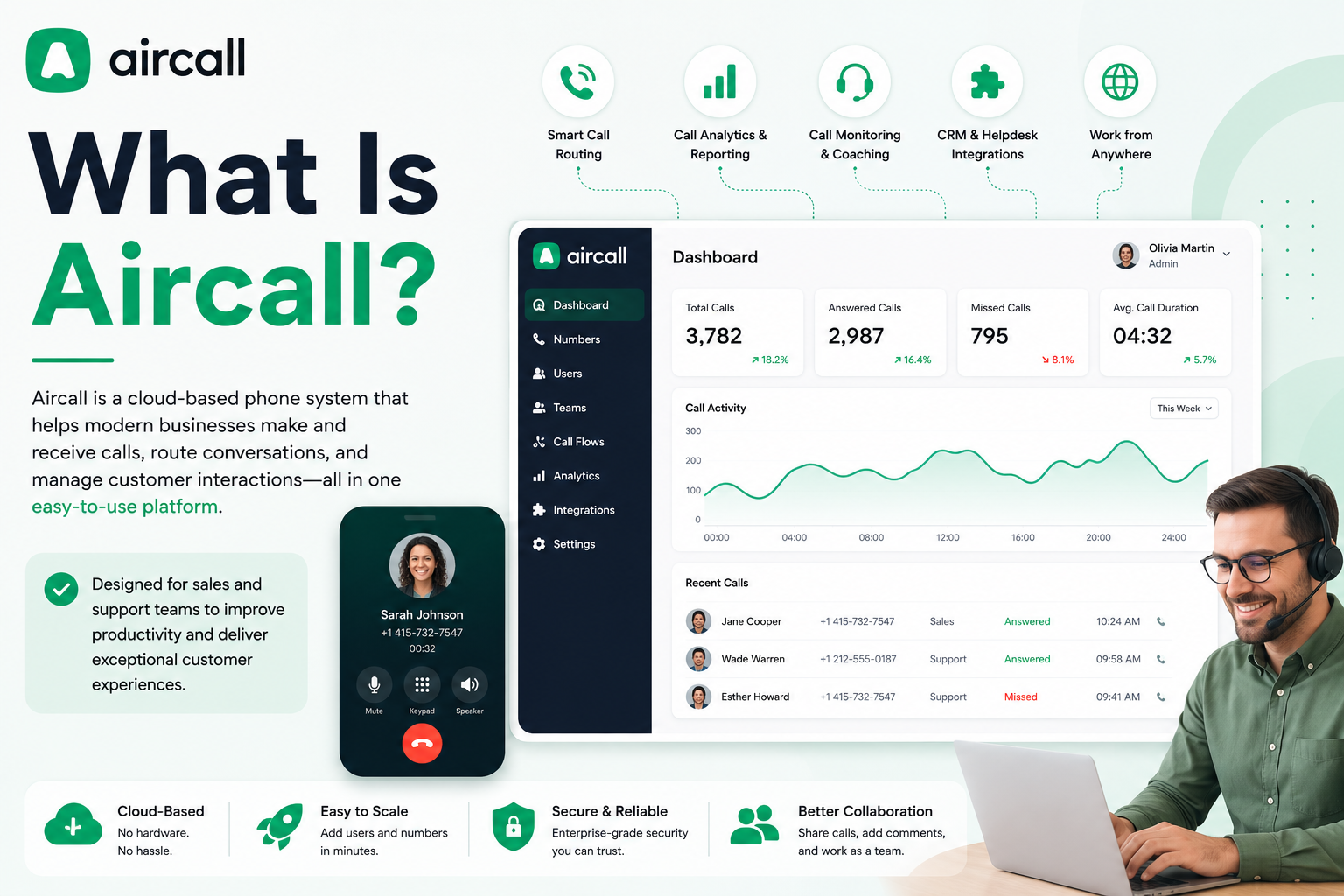
What Is Aircall?
Internet-based calling comes alive through Aircall, a system swapping old-style phones for digital connections. Built with frontline workers in mind – those who talk to customers daily – it serves sales staff, helpers on support desks, even busy contact center voices. Instead of copper wires, conversations travel across online pathways smoothly. Teams adapt quickly because setup leans into simplicity without heavy hardware. What once needed physical infrastructure now runs within browsers and apps. People answer or dial out using devices they already own. Flexibility grows when location stops mattering as much. Each user gets tools tailored to real-time interactions. Voice clarity stays sharp thanks to stable web protocols underneath. Customer talks gain structure with integrated tracking features.
Starting from anywhere, Aircall runs on the internet so companies get phone lines fast. Teams show up online before gear arrives. Handling customers happens through screens instead of wires. No big machines needed, just access. Setup skips old systems entirely.
Essential aspects of aircall
Cloud-Based Phone System
Out in the digital open, Aircall runs without needing hardware on-site. Wherever people log in – be it home, café, or headquarters – the system keeps them linked up through any standard device. Connection sticks, even when locations shift day to day.
Smart Call Routing
Some teams rely on Aircall to send incoming calls straight to the correct team member through smart routing choices. Instead of guessing, callers navigate voice menus that guide them where they need to go. Routing based on agent skills means help arrives quicker than before. Custom paths shape how each call moves, improving response times without extra effort.
Call Monitoring and Coaching
From the first ring, managers hear what happens live during calls. They step in when needed, guiding staff while talk unfolds naturally. Instead of waiting, feedback flows right after interactions end. Sales skills grow stronger over weeks, thanks to ongoing observation. Support replies become clearer, more helpful, simply through regular review.
Power Dialer
Out of nowhere, reps save minutes on calls thanks to Aircall’s Power Dialer quietly handling outgoing sequences. Instead of punching each digit by hand, the system moves through contacts like a steady rhythm. One after another, attempts launch without pause. What used to eat up seconds now flows – smooth, constant, almost unnoticed. Time stacks up differently when clicks vanish into automation.
Call Analytics and Reporting
Aircall tracks how many calls come in, how fast teams answer, which ones slip through, plus how reps are doing on each task. When leaders see these numbers clearly, choices about support get sharper by the day.
crm helpdesk tools connect
What makes Aircall stand out? It connects smoothly with widely used apps like Salesforce, HubSpot, Zendesk. Information about customers flows between systems without needing someone to retype it. Because of this linkup, teams spend less time on repetitive tasks. Work moves faster when data travels on its own.
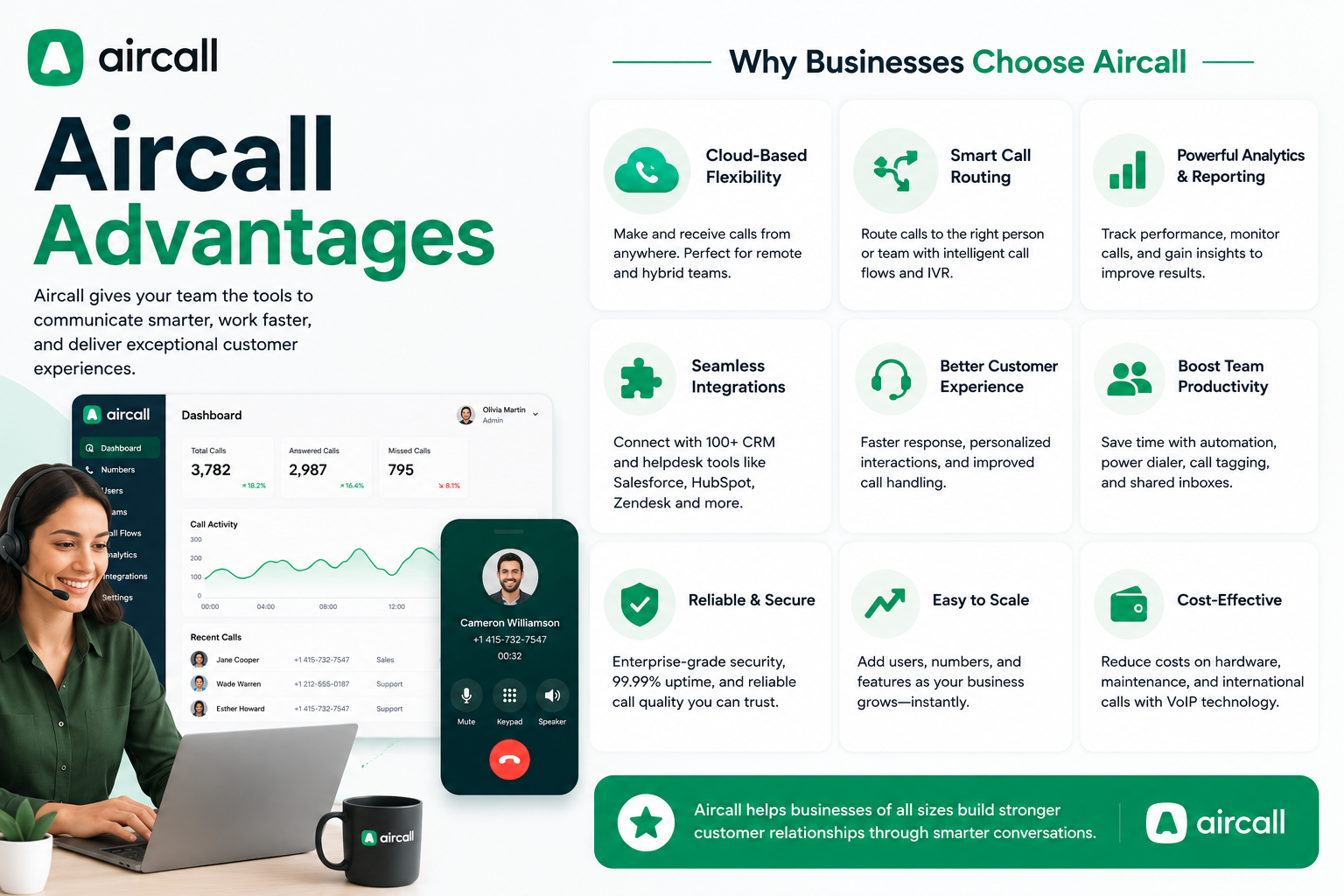
Aircall Advantages
Improved Customer Experience
Faster answers, tailored just right – people want that when they reach out. With smart pathfinding for every call, Aircall keeps teams moving without delays. Pulling up details takes seconds, not minutes, so conversations stay on track. Smooth handoffs between team members happen naturally, cutting down wait times. Each step connects cleanly, making follow-ups simpler than before.
Increased Productivity
With automation handling routine work, agents spend time where it matters most – talking to customers. Because of this shift, teams manage higher call volumes without dropping standards.
Scaling With Business Growth
When companies grow, talking across teams gets trickier. With Aircall, bringing in new people, sections, or lines happens smoothly – no extra gear required.
Better Team Collaboration
Teamwork gets easier when everyone sees the same caller messages. One person tags a call, another adds notes – details stay clear. Assignments shift smoothly between members. Quick fixes happen because nothing slips through cracks. Shared access keeps pace with fast-moving conversations.
Remote and global team support
Working online means Aircall lets staff handle company calls from any location. Since it runs through the web, staying connected doesn’t depend on being in an office. Remote setups fit naturally with how the system operates. Teams spread across time zones find it works without hiccups. Global companies rely on it because distance doesn’t break functionality.
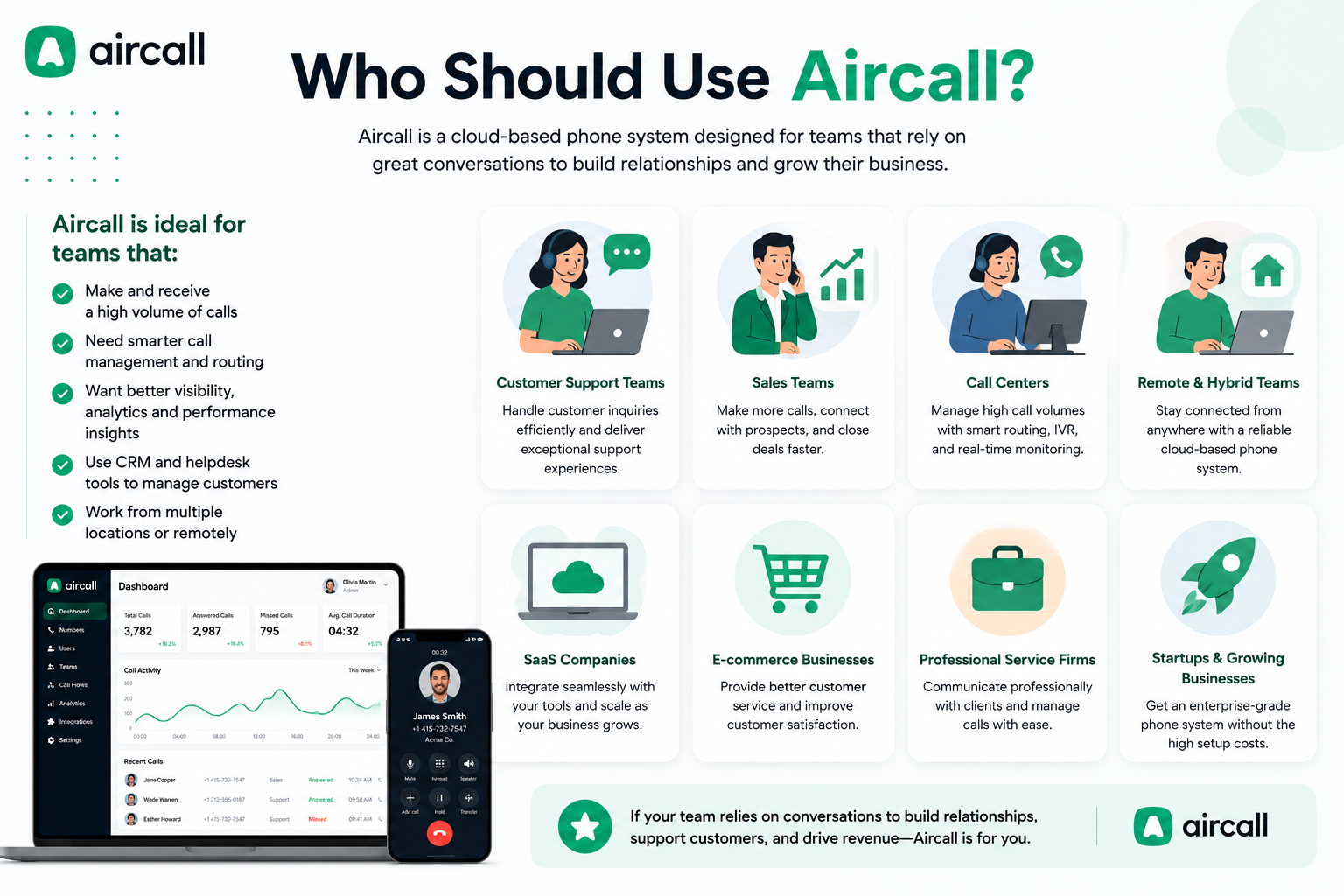
Who Should Use Aircall?
Aircall is a valuable solution for:
- Customer support teams
- Sales departments
- SaaS companies
- Call centers
- E-commerce businesses
- Marketing agencies
- Professional service firms
- Remote and hybrid organizations
Aircall’s cloud system works well for businesses using phones a lot. When talk happens mostly by call, this setup helps keep things running. Offices focused on voice chats find it smooth to handle daily tasks. Firms where customer contact is key often see improvements. Using internet-powered calling changes how teams manage conversations.
Businesses Pick Aircall
Aircall gets picked by companies not for flash but for how it just fits. Starting fast matters, so setup skips long waits. Tools already in use? They link right up, no forcing. Fancy functions arrive ready, yet nobody needs a manual to make them work. Smooth, quiet, effective – that sums it.
With Aircall, companies adjust fast when demands shift – no matter how sudden. Old-style phones can’t keep up. Yet every customer still gets clear, reliable service. Flexibility shows up without sacrificing quality.
Final Thoughts
Cloud-based calling gets easier with Aircall, now widely used by today’s teams. Built-in tools handle calls smoothly while tracking every detail along the way. Automation runs quietly behind scenes, reducing manual steps without slowing things down. Data flows into CRMs automatically, keeping records updated across platforms. Teams focused on better conversations often find their rhythm here. Performance insights appear clearly, helping tweak strategies fast when needed. Customer interactions feel more connected, less scattered than before. Setup stays simple even as demands grow over time. Reliability holds up during high-volume moments, not just quiet hours. Businesses aiming to streamline outreach tend to stick around once they start.
From overseeing sales crews to guiding help desks or shaping teams that work apart, Aircall equips each role with what it takes to smooth out conversations while lifting service quality. Though setups differ, the backbone stays steady – clear contact paths built right into daily flow.