
2025’s Top Free CRM Resources for Startups

2025's Top Free CRM Resources for Startups

Managing client connections is crucial in today’s fast-paced digital environment, particularly for businesses looking to increase sales, foster trust, and expand quickly. CRM (Customer Relationship Management) tools can help with it. The finest aspect? To begin, you don’t need a huge amount of money.

These are the top free CRM solutions for startups in 2025 that offer robust capabilities without breaking the bank, whether you’re handling leads, tracking sales, or organizing customer data.

1. CRM from HubSpot

The Greatest Free CRM for Startups Overall

Why It’s Excellent:

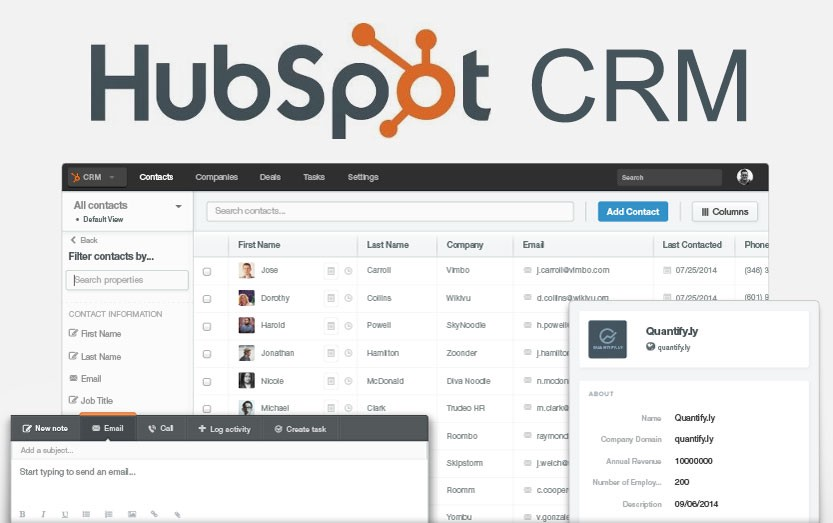
Without a doubt, one of the most well-liked and intuitive CRMs for startups is HubSpot. Surprisingly generous, its free plan is perfect for startups.

Key attributes:

  • Tracking deals and managing contacts
  • Scheduling and email templates
  • Visualization of pipelines
  • Marketing resources such as landing pages and forms
  • Outlook and Gmail integration

Perfect for: New businesses seeking a comprehensive sales and marketing platform with expansion potential.
CRM from HubSpot

2. The Free Edition of Zoho CRM

Ideal for Personalization

Why It’s Excellent:

Zoho CRM is quite flexible and can be readily customized to fit your particular workflow.

Key attributes:

  • Tools for automating sales
  • Management of leads and contacts
  • Task tracking and email insights
  • Access to mobile apps
  • Three users are free.

Perfect for: New businesses that require flexibility and intend to grow over time.

3. Freshworks’ Freshsales: Free Plan

Best for Budget-Friendly AI Features

Why It’s Excellent:

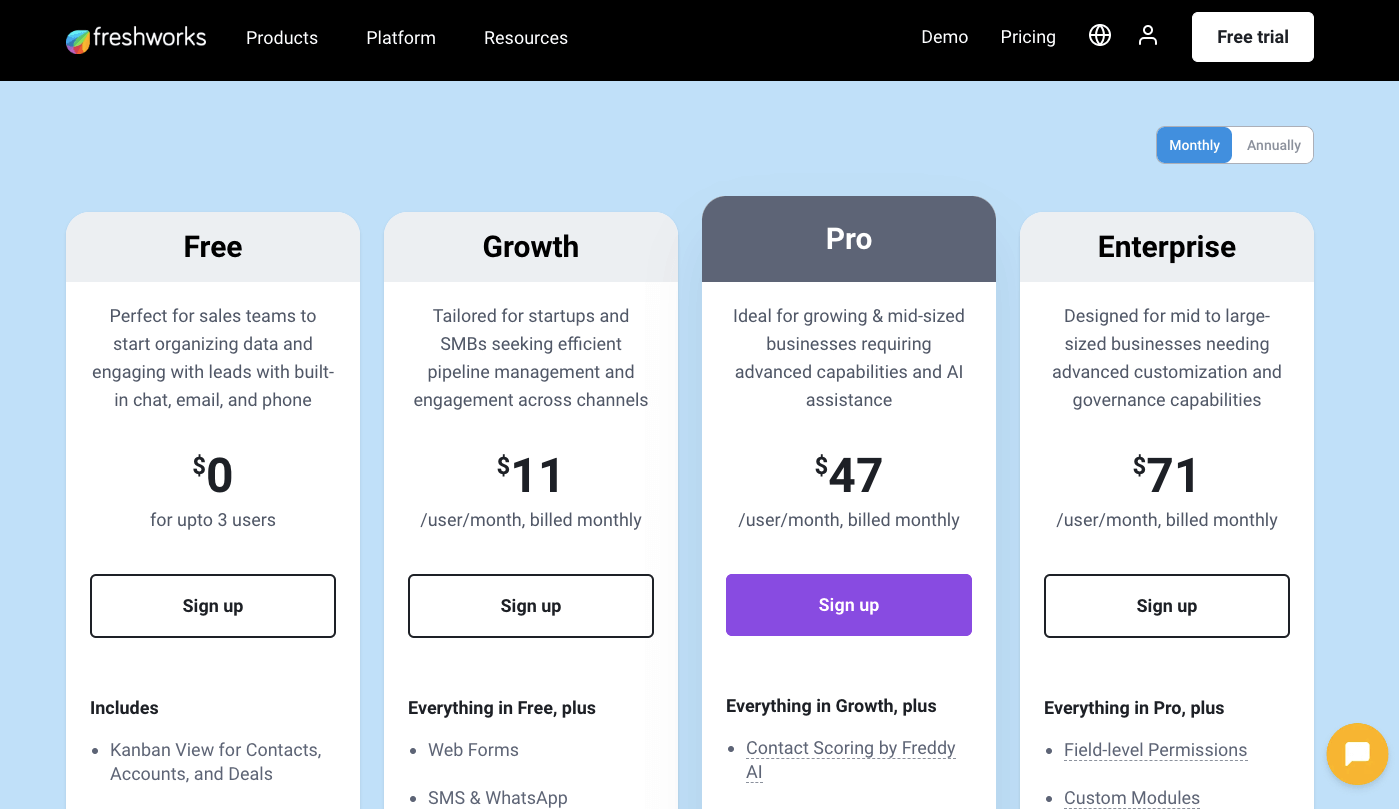
Even on the free plan, Freshsales provides an easy-to-use UI with AI-powered capabilities.

Key attributes:

  • Management of contacts and accounts
  • Analytics for email monitoring and engagement
  • Lead scoring using AI (limited)
  • Fundamental features of automation

Perfect for: Sales teams seeking an AI advantage without having to pay for it up front.
Freshworks' Freshsales: Free Plan

4. CRM by Bitrix24

The Greatest One-Stop Shop with Extras

Why It’s Excellent:

Beyond CRM, Bitrix24 provides other services. It offers free task management, sales tools, and collaboration.

Key attributes:

  • Management of pipelines
  • Tools for tasks and projects
  • Features of team communication
  • Automation of marketing
  • Unlimited users can use it for free; however, there are storage constraints.

Perfect for: New businesses that want a single platform for internal collaboration and CRM.

5. The Free Plan for Capsule CRM

Ideal for Ease of Use and Simplicity

Why It’s Excellent:

Ideal for startups, Capsule CRM concentrates on essential CRM functionalities without overburdening users.

Key attributes:

  • Management of contacts
  • Monitoring the sales pipeline
  • Monitoring of tasks and activities
  • Connectivity with Mailchimp, Google Workspace, and more

Perfect for small teams and founders seeking a straightforward and efficient solution.

The Free Plan for Capsule CRM

Extra Points to Remember:

  • Streak CRM: Excellent for solopreneurs, integrated right into Gmail.
  • Apptivo offers up to three users a good combination of project management and CRM.
  • Despite having many features, Agile CRM is free for up to ten users (with restrictions).

Final Thoughts

The right free CRM tool can help your startup build better relationships, close more deals, and stay organized without burning through your budget.

Our picks at a glance:

CRM Tool Best For Free User Limit
HubSpot CRM All-in-one features Unlimited
Zoho CRM Customization 3 users
Freshsales AI-driven sales tools Unlimited
Bitrix24 CRM + project collaboration Unlimited
Capsule CRM Clean, simple sales tracking 2 users

Pro Tip: Use a free version at first, see what works, and only upgrade when your company really requires additional capability.

YouTubers’ Top 5 Video Editing Tools for 2025

YouTubers' Top 5 Video Editing Tools for 2025

Video editing is becoming a must for YouTubers in the content-driven world of today. Having the correct editing software may make or break your channel, whether you’re vlogging, reviewing things, or producing cinematic video.

The good news? In 2025, there will be no shortage of robust, easy-to-use video editing solutions to suit all budgets and ability levels. The Top 5 video editing tools for YouTubers are listed below to help you improve your work.

1. Premiere Pro by Adobe

Ideal for: Skilled YouTubers and producers seeking cutting-edge functionality.

The industry standard for video editing is still Adobe Premiere Pro. With its accurate controls, powerful capabilities, and smooth connection with other Adobe products like Photoshop and After Effects, it is used by both YouTubers and filmmakers.

Important attributes:

  • Color grading and multi-camera editing
  • Effects and motion graphics
  • Enables VR, 4K, and 8K editing
  • Social media auto-reframe

Reasons to Love It:

It provides unparalleled creative control, is updated frequently, and is of professional quality.

Premiere Pro by Adobe

2. Final Cut Pro

Ideal for: Mac users looking for quick and simple editing.

Apple’s high-end editing program, Final Cut Pro, is renowned for its robust capabilities, speed, and stability. For producers who want to make excellent videos without a significant learning curve, it’s perfect.

Important attributes:

  • Timeline with magnetic properties
  • Superior color grading
  • HDR support and 360° video
  • Apple Silicon-optimized (M1, M2, etc.)

Reasons to Love It:

It’s quick, elegant, and ideal for YouTubers who want high-quality Mac output.

Final Cut Pro

3. The DaVinci Resolve

Ideal for: Artists seeking free, professional-caliber color grading.

Because of its Hollywood-caliber color correction features, DaVinci Resolve is a favorite among editors. The finest aspect? The most basic version is still very powerful and is free.

Important attributes:

  • Leading color tools in the industry
  • Fusion for visual effects and motion graphics
  • Pro-level audio editing using Fairlight
  • Collaboration among multiple users

Reasons to Love It:

Resolve is a must-try if you want professional quality but are on a tight budget.

The DaVinci Resolve

4. Wondershare’s Cinema

Ideal for: Novice and intermediate artists.

Even for novice users, Filmora’s easy-to-use drag-and-drop interface, pre-installed templates, and transitions make editing quick and enjoyable. It’s perfect for instructional creators and lifestyle vloggers.

Important attributes:

  • AI audio denoise and clever cutoff
  • Library of stock media
  • Integrated animations and effects
  • Simple export settings for social networking

Reasons to Love It:

Despite being beginner-friendly, it enables you to swiftly produce visually appealing and captivating videos.

Wondershare's Cinema

5. Desktop CapCut

Ideal for: material producers who specialize in mobile editing and short-form material.

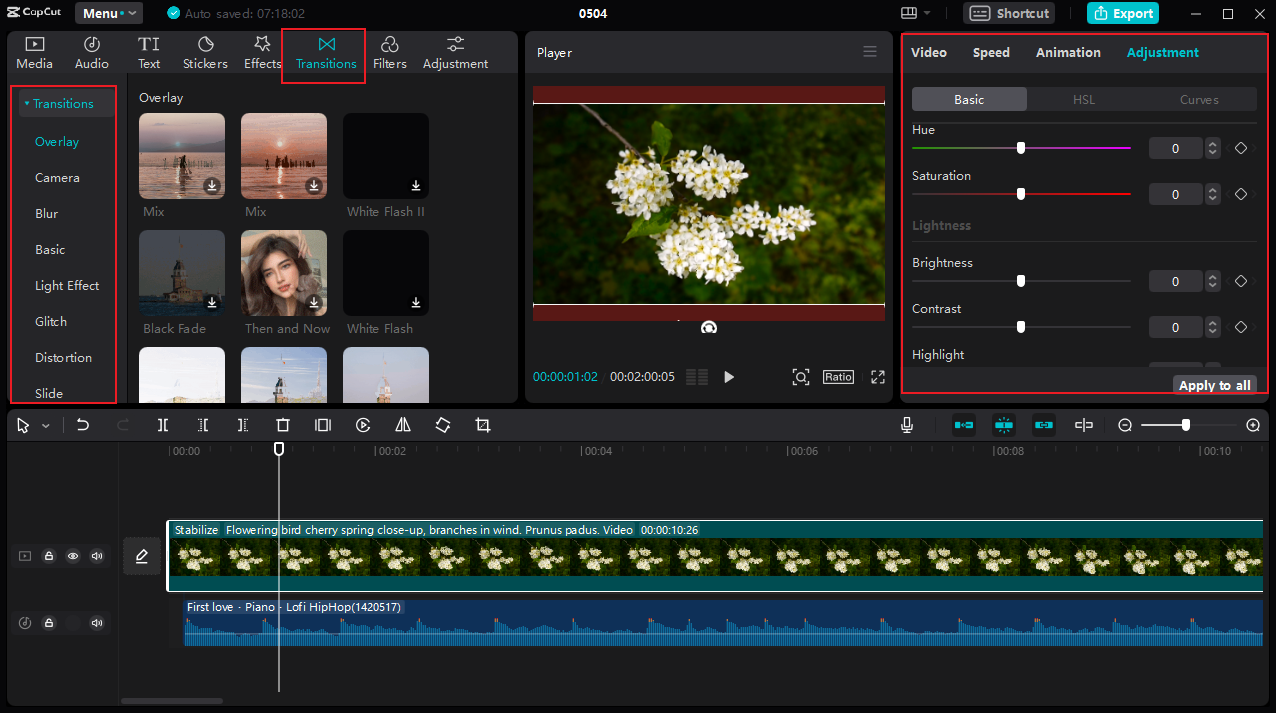
Initially developed as a mobile application, CapCut now offers a robust PC version. It’s quick, free, and ideal for anyone who creates TikTok, YouTube Shorts, or Reels.

Important attributes:

  • Speech-to-text and auto-captioning
  • Stylish transitions and templates
  • AI background eliminator
  • Simple exports to social media

Reasons to Love It:

It’s easy to use, portable, and ideal for making fast modifications while on the road.

Desktop CapCut

Concluding remarks

Every YouTuber in 2025, regardless of whether they are just starting out or growing their channel, can find the ideal video editing tool. Here’s a summary:

Tool Best For
Adobe Premiere Pro Advanced editors & pros
Final Cut Pro Mac-based creators
DaVinci Resolve Free, pro-quality editing
Filmora Beginners & quick edits
CapCut Short-form video creators

Pro Tip: Select a tool that complements your workflow and editing style. Avoid chasing things you won’t utilize because better, quicker content development is frequently the result of simplicity.

Google Workspace vs Microsoft 365: Which Fits You Best?

Google Workspace vs Microsoft 365

Having the appropriate productivity package can make or break your workflow in the hybrid work environment of today. Google Workspace and Microsoft 365 are the two titans that rule this market. It can be difficult to decide between these two platforms if you’re a student, freelancer, business owner, or member of a corporate team.

So, which is superior, Google Workspace or Microsoft 365?

To assist you in making a decision, let’s examine a side-by-side comparison.

Key Elements in a Flash

Both suites provide:

  • Cloud-based storage
  • Calendar and email tools
  • Features for collaboration
  • Spreadsheets, presentations, and word processing
  • Video conferences
  • Administrator and security controls

However, they differ greatly in how they provide these characteristics and for whom they work best.

Email and Interaction

Microsoft 365:

  • Uses Outlook as its main email program.
  • Includes Microsoft Teams for teamwork and communication as well as robust calendar functions.
  • Excellent for managing emails at the corporate level.

Google Workspace:

  • Provides Gmail, which is renowned for its dependability, speed, and user-friendly interface.
  • Makes and receives calls using Google Meet and Chat.
  • Better suited for people who want straightforward online communication.

Conclusion:

  • If you enjoy the integration of Teams and Outlook, choose Microsoft 365.
  • For clear, simple Gmail communication, go with Google Workspace.

Apps for Productivity

Microsoft 365:

  • Provides industry-standard document, data, and presentation capabilities, including Word, Excel, PowerPoint, and OneNote.
  • Desktop applications are incredibly feature-rich and powerful.
  • Perfect for complex spreadsheets, presentations, and intensive document formatting.

Google Workspace:

  • Provides web-based, collaboratively efficient Docs, Sheets, Slides, and Keep.
  • Real-time editing and auto-save are advantages.
  • Simpler to use but with fewer functionalities.

Conclusion:

  • Professionals and power users might favor Microsoft 365.
  • Google Workspace is ideal for teams that prioritize collaboration and casual users.

Apps for Productivity

Cloud-Based Storage

Microsoft 365:

  • Provides each user with 1TB of OneDrive storage.
  • Strongly integrates with Office and Windows applications.

Google Workspace:

  • Includes 30GB of storage on Google Drive, with the option to increase storage dependent on plan.
  • Outstanding search and sharing capabilities.

Conclusion:

  • Choose OneDrive if file versioning and Windows integration are important to you.
  • Google Drive is the best option for quick sharing and smooth cloud access.

Cooperation and Editing in Real Time

Microsoft 365:

  • Although supported, real-time editing is a little less user-friendly.
  • Stronger in terms of file quality and offline access.

Google Workspace:

  • Its greatest strength is the ability to collaborate in real time.
  • You don’t have to click “Save” because everything happens right away.

Conclusion:

  • When it comes to team collaboration, Google Workspace leads the way.
  • If you want to edit in-depth and individually, Microsoft 365 is better.

Administration and Security

Both include mobile device management, encryption, and two-factor authentication for enterprise-level security.

Microsoft 365:

  • More detailed compliance tools and admin controls.
  • Perfect for regulated sectors and larger companies.

Google Workspace:

  • A less complicated admin panel that is still quite safe.
  • Excellent for small to medium-sized groups.

Conclusion:

  • For complicated administrative and security demands, Microsoft 365 is the best option.
  • Google Workspace is ideal for startups and is simpler to administer.

Administration and Security

Pricing

Both offer competitive pricing with business and enterprise plans.

Plan Microsoft 365 Google Workspace
Basic $6/user/month $6/user/month
Standard $12.50/user/month $12/user/month
Premium Varies Varies

Verdict:
Very similar in price. Choose based on which ecosystem you prefer.

Conclusion: Which Should You Pick?

Select Office 365 if:

  • You use Word, PowerPoint, and Excel a lot.
  • You like your desktop apps to be strong.
  • Your company has intricate IT or compliance requirements.

Select Google Workspace in case:

  • You want tools that are cloud-first, quick, and easy to use.
  • Working together is your priority.
  • You prefer to work exclusively on your phone or online.

In conclusion

There isn’t a single, universal solution. It all depends on your workflow, team size, and tech choices, but both platforms are strong and very valuable.