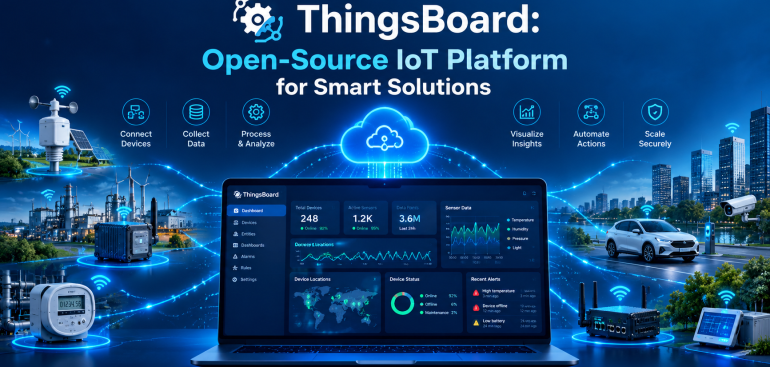
The Internet of Things (IoT) is a broad concept that includes a variety of use cases fueled by the data gathered from connected devices. The scope of these use cases varies from smart farming and energy monitoring to fleet management and industrial IoT. In such scenarios, ThingsBoard IoT Platform is used to collect, process, and visualize the data coming from devices.
What Is ThingsBoard?
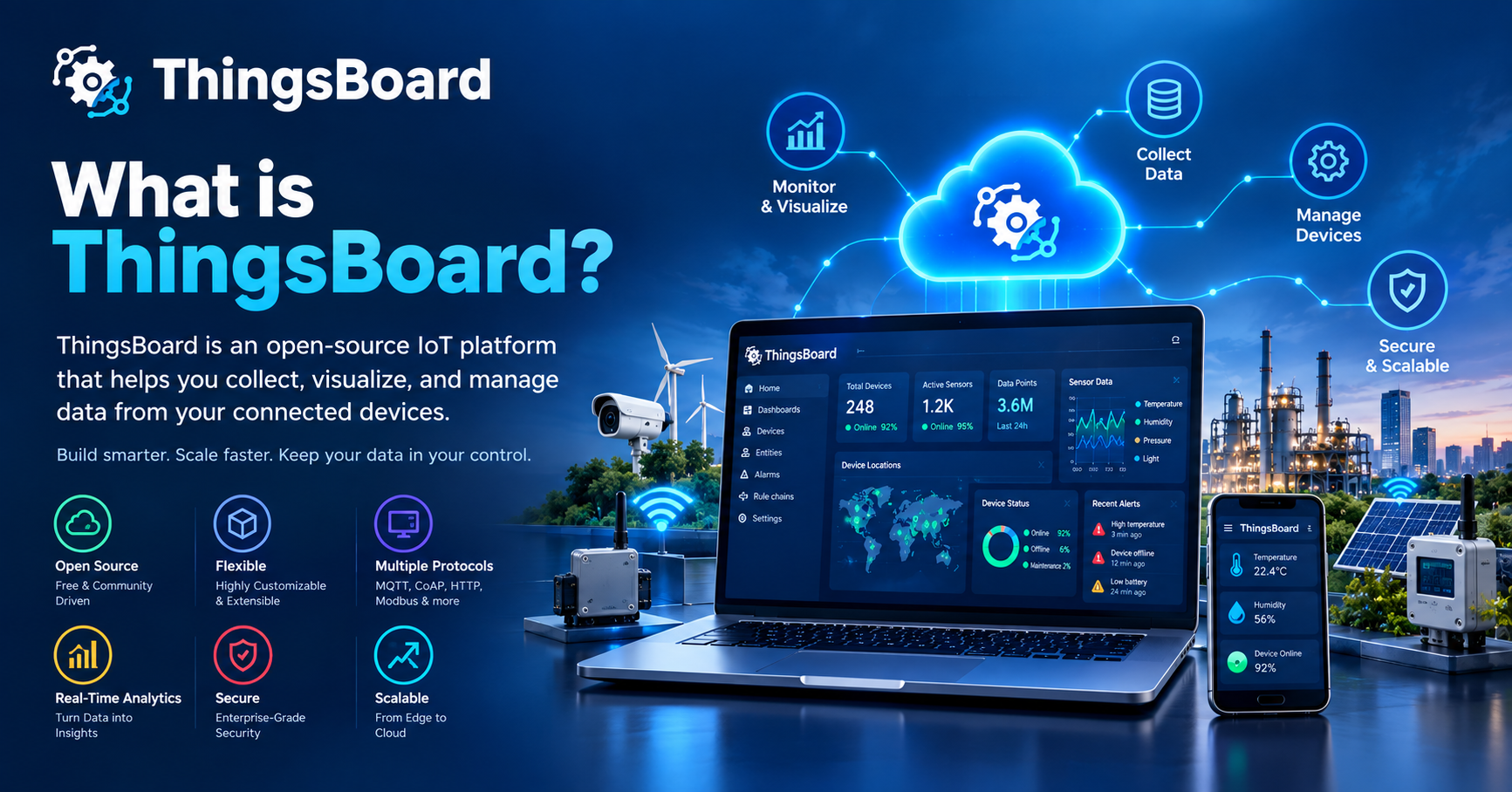
ThingsBoard is an open-source multi-tenant IoT platform for connecting, managing and monitoring devices from a single place. It enables to collect relevant information about devices by offering users a set of tools for viewing, analyzing, storing the telemetry data, tracking alarms and attributes, and building dashboards. The software uses such communication protocols as Message Queue Telemetry Transport (MQTT), CoAP, and Hyper Text Transfer Protocol (HTTP) to collect the data about the devices. Plus, it can consolidate all the devices, both physical and virtual, to monitor and manage them properly.. In addition, the platform can be hosted on cloud infrastructure or deployed in an enterprise’s private system to provide businesses with greater control and management of their data.
Device Management:
An essential part of any IoT project is device management, and ThingsBoard has this functionality included. Users may register, configure, and monitor devices through the application. The former may represent sensors, controllers, and other physical devices, and gateways or virtual devices. In the latter case, one may utilize ThingsBoard to build an abstraction layer between their organization and devices. Moreover, ThingsBoard allows you to view the device’s credentials, status, telemetry data, and the ability to issue remote commands.
IoT Dashboards:
ThingsBoard allows you to create customizable dashboards and view the data gathered from the devices in real-time. These dashboards may include charts, tables, maps, and other elements that help you keep track of the information. Additionally, one may use the historical data feature to see the trends. The application allows you to organize and display this data in a meaningful way that helps keep track of the critical assets. Some examples of such data include the state of the machinery, energy consumption, vehicles’ location, and the like.
Rule Engine and Data Processing:
The ThingsBoard Rule Engine enables you to design rule chains and manipulate the data coming from the devices. For example, one may create actions that modify the data or issue notifications or commands to devices in specific situations. This feature allows one to take actions in response to the data received from connected devices.
IoT Gateway and Connectivity:
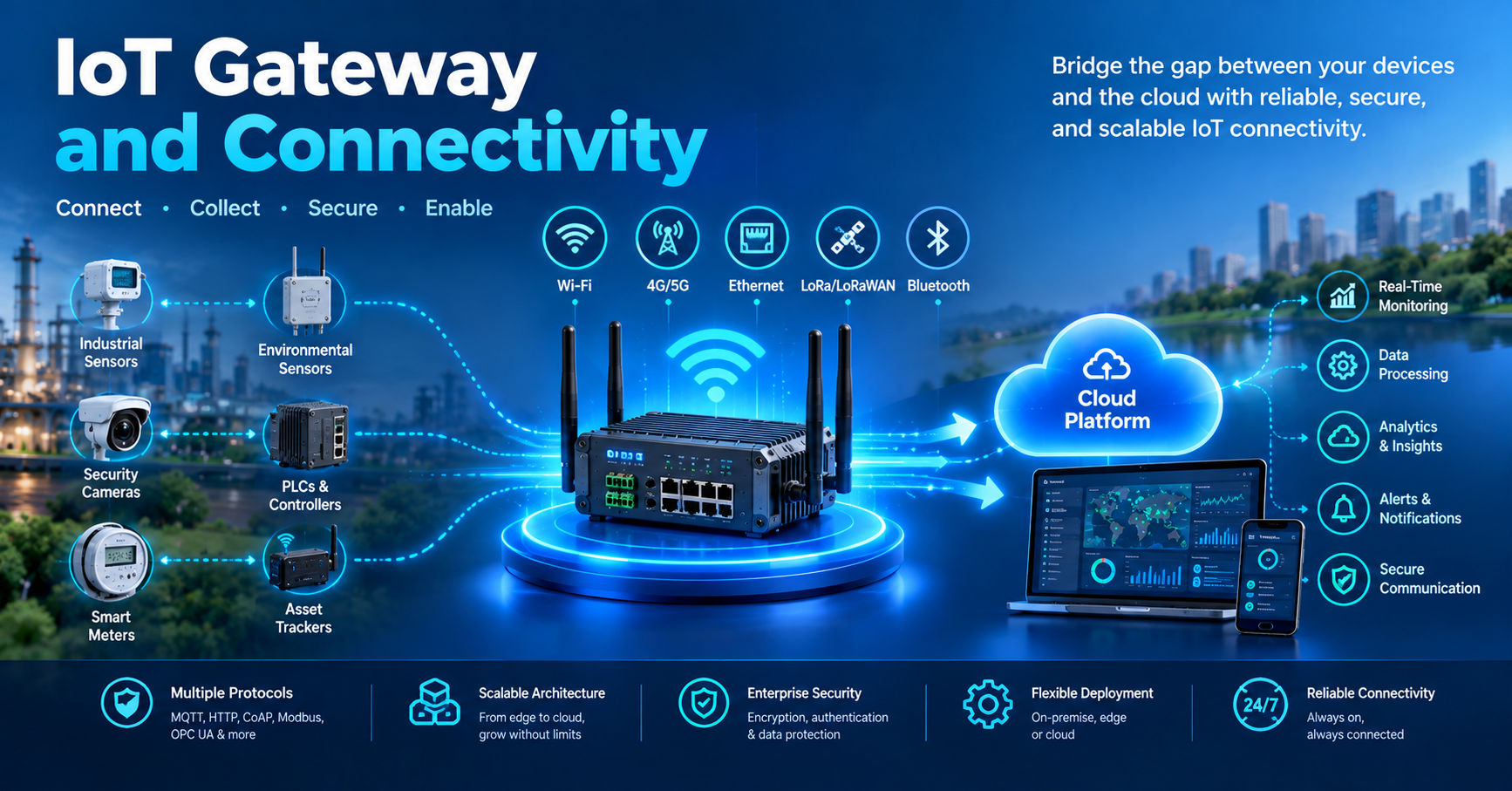
ThingsBoard IoT gateway is an integral part of the platform that allows it to communicate with a variety of devices and external systems. The edge service enables IoT devices to connect to the ThingsBoard application through a variety of methods, including MQTT, Modbus, OPC-UA, BLE, CAN, and others. This way, the platform may be utilized in a variety of industrial IoT use cases, spanning from smart energy and smart farming to fleet management and water metering.
Conclusion:
In summary, ThingsBoard is an open-source IoT platform that may be used to design and implement various IoT-enabled use cases. It allows users to view, process, and analyze the data coming from the devices and monitor their state with the help of rule chains. The application provides users with a set of tools that allow one to view the data in real-time and build dashboards to keep track of the critical information. ThingsBoard may be utilized in a variety of use cases, ranging from smart farming to water metering and fleet management.